[ Title ]
[ Introduction ]
Every day brings another headline about artificial intelligence. AI is everywhere. It can replicate almost anything that was once considered uniquely human. But this ease of creation hides a significant problem.
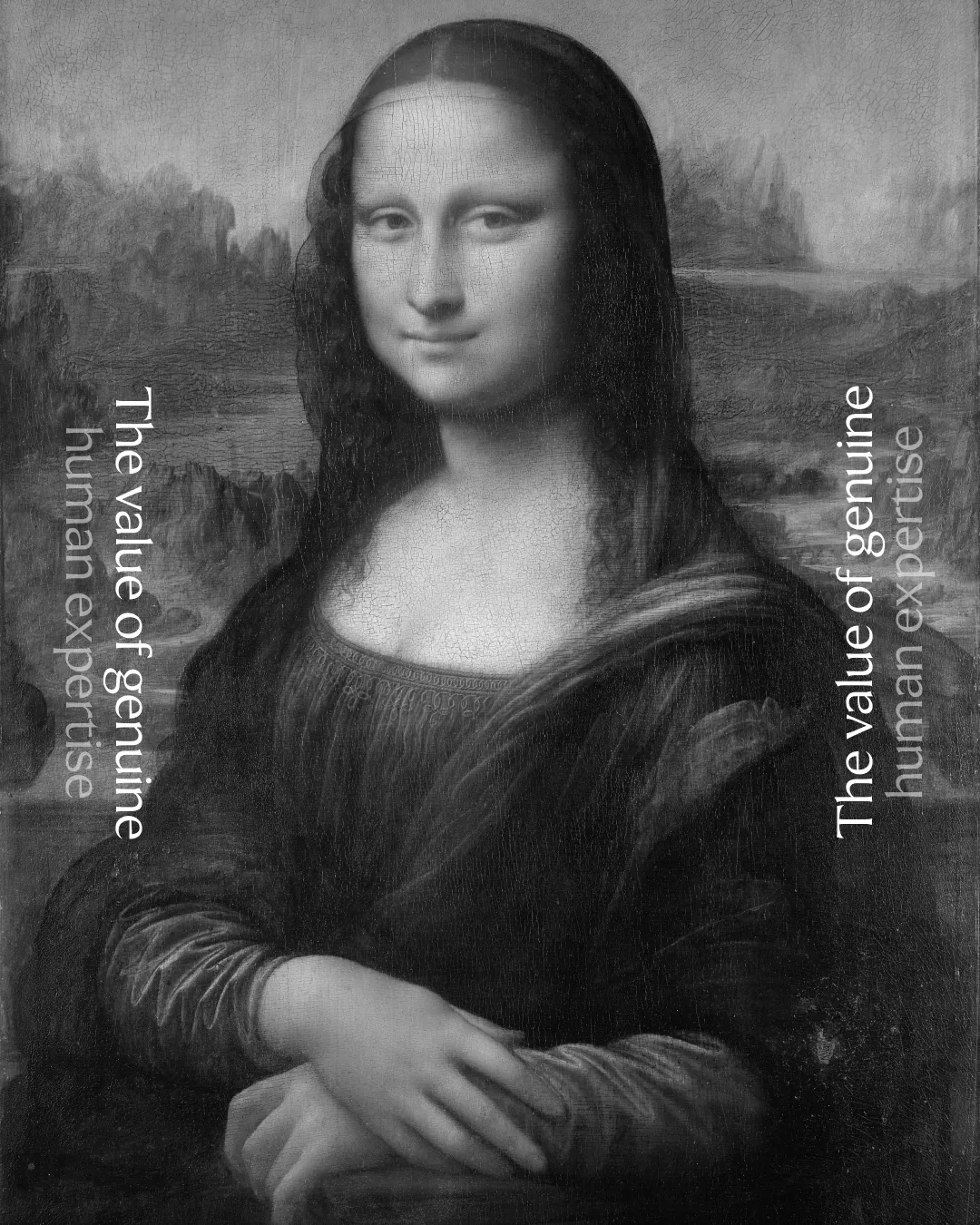
The Uniformity Problem
The vast majority of what we call AI today is a sophisticated interface built on top of a handful of large models trained on content that humans originally created. AI doesn't generate genuinely new ideas from first principles — it produces a well-organised, efficient compilation of existing work. On the surface: impressive. At its core: synthetic.
This uniformity is something the human eye and mind will eventually detect. Just as instant food quickly loses its appeal through monotony, AI-generated content will increasingly reveal its mechanical nature — the absence of a real perspective, a real story, a real decision made under real constraints.
History Keeps Making the Same Point
Every technology that was supposed to replace an existing form of human expression paradoxically increased the value of the original. When e-readers arrived, publishers predicted the end of physical books. Beautifully bound editions are now more valued than ever. When MP3s and streaming services appeared, music seemed to lose its physical dimension. Vinyl records are a growth market.
The pattern is consistent: technology scales access and lowers the cost of the average, which makes the exceptional more exceptional. When anyone can generate a competent image in seconds, the human who has spent years developing a distinctive perspective becomes more valuable — not less.
What This Means for How We Build
At accute, we think about this directly. AI accelerates our development process — but the value we deliver isn't the code. It's the decade of experience understanding how investment operations actually work, what regulators actually require, where financial systems actually fail. That knowledge can't be generated. It has to be lived.
The companies that will use AI well aren't the ones that replace human expertise with it. They're the ones that use it to make human expertise go further — faster prototypes, better documentation, more time for the decisions that actually require judgement.
The Opportunity in the Noise
As AI-generated content becomes ubiquitous, authenticity becomes scarce. The businesses, creators, and institutions that offer something genuinely human — real perspective, real accountability, real expertise — will stand out more clearly, not less. The renaissance of humanity that AI will trigger isn't despite technological progress. It's because of it.


[ BUILT FROM THE INSIDE ]